
Sustainability Report 2025

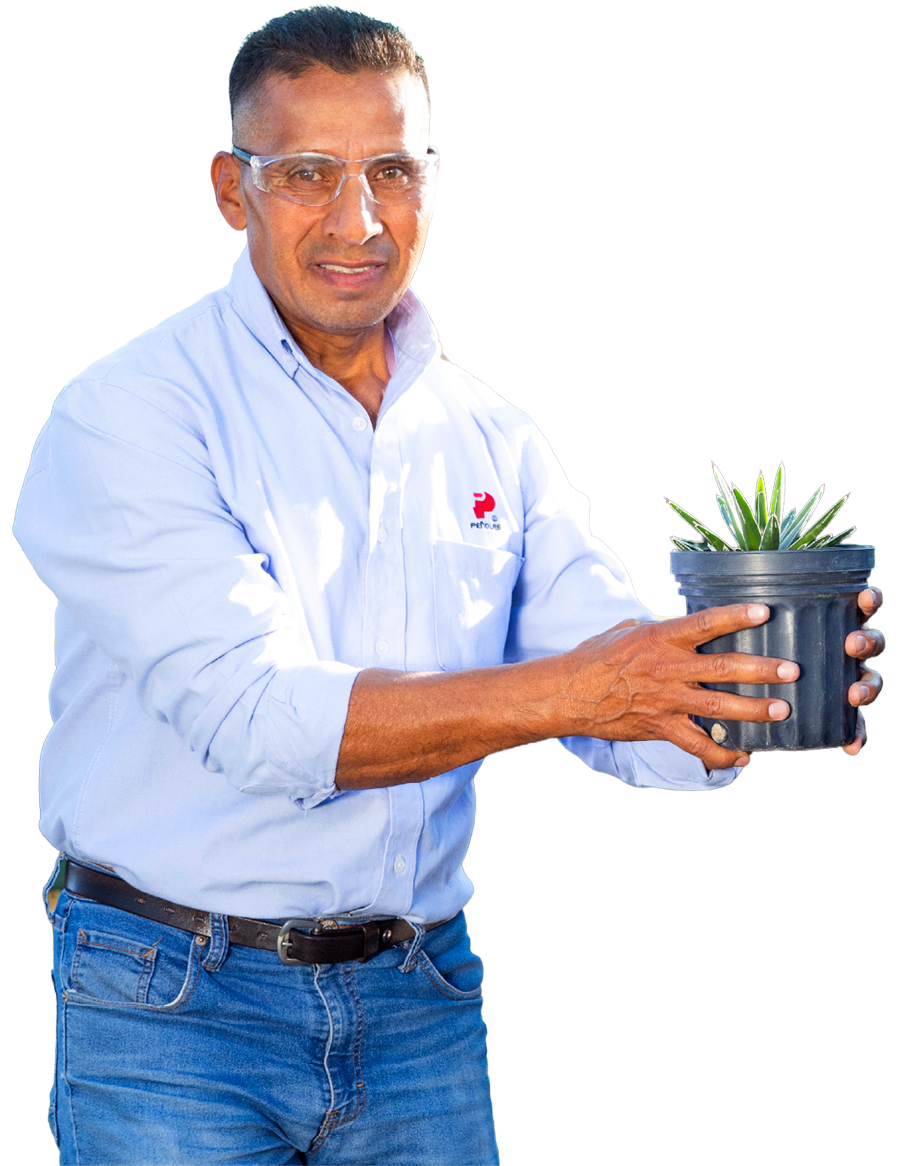
Peñoles collaborator wearing safety glasses holding a potted plant

Environmental

Our environmental responsibility includes actions such as efficient water and waste management, emissions control, and biodiversity conservation.

Environmental management

Environmental stewardship is key to the success of our business strategy. We are committed to ensuring productive and sustainable operations with our people’s participation.

High Potential Strategy

Our organization expanded the scope of our High Potential Strategy to include the management of critical environmental risks. This strategy is based on a critical controls methodology and encompasses incident and behavior management—promoting visible leadership in the field. Losing control of a critical environmental risk could lead to environmental impacts, sanctions, and in severe cases, loss of environmental permits and authorizations. To prevent these impacts, we identify and implement critical controls that enable us to effectively manage these risks.

In the first phase of our strategy, we prioritize three critical risks:

  • Emissions
  • Spills
  • Authorizations and permits

Our High Potential Strategy contributes to robust environmental management and regulatory compliance—essential elements for operational continuity.

Environmental incidents

In 2025, Industrias Peñoles had no significant environmental incidents. We reported two emissions-related incidents to the environmental authorities, both of which were promptly controlled on-site and resulted in no major consequences.

Category Reportable incidents1 Significant incidents2
Water 0 0
Waste 0 0
Emissions 2 0
  1. Reportable incident: A noncompliance incident that requires notification, control, and remediation in accordance with applicable environmental regulations. These incidents are considered reportable even if they were promptly controlled and did not result in major consequences.
  2. Significant incident: A reportable incident that also has material financial consequences due to remediation and/or restoration activities for environmental damage; partial or total suspension of operations due to damage to facilities; and/or sanctions and fines imposed by the authorities.

Water stewardship

We recognize that water is a shared resource of great environmental, social, cultural, and economic value. Protecting it is key to earning and maintaining the trust of communities and regulators in the regions where we operate and develop projects. We are committed to effective water management and stewardship, stakeholder collaboration, and transparency in our performance.

Policies, guidelines, and procedures

  • Sustainability Policy
  • Third-Party Code of Ethics and Conduct
  • Environmental Management Guidelines
  • Water Management Operational Procedure

Impact, risk, and opportunity management

Our strategy for managing water-related impacts, risks, and opportunities is based on three pillars aligned with the International Council on Mining and Metals (ICMM) position statement on water stewardship and UN SDG 6, Clean Water and Sanitation.

Water management
and stewardship

Effective water management

Effective water management considers both quantity and quality, along with impact prevention. Our main resilience strategies in water-stressed areas include reducing consumption and utilizing water of varied quality. We leverage process and environmental monitoring to help avoid impacts on water resources.

Metrics and performance

We rigorously comply with applicable regulations at all levels and strive to preserve our company’s reputation by maintaining and adopting best practices in water management. This allows us to reduce operating costs and maximize water reuse efficiency—achieving a 76% recirculation rate in industrial and sanitary processes. To minimize freshwater consumption, according to our corporate balance sheet, we utilize up to 23% of municipal wastewater and opt for the use of brackish water in the arid regions where we operate, representing 19% of our consumption.

Used as a replacement for fresh water, wastewater from the city of Torreón reached 85% of the Metals division’s water consumption. Brackish water represents 99% of the Chemical division’s water consumption. Thanks to our closed-loop systems, we do not discharge process water.

We implement preventive and predictive maintenance programs to avoid leaks in our systems, and our measuring devices and treatment plants recirculate water from our internal services.

Corporate water balance (Ml)

Operational efficiency / Water consumption and reuse

Biodiversity conservation

Managing biodiversity responsibly throughout our operations’ life cycle is part of our commitment to sustainable development and a key element in meeting regulatory requirements and maintaining stakeholder trust. We take action to preserve ecosystems, promote reforestation, and protect wildlife and biodiversity at our projects and operations in collaboration with local communities. All our operations are located outside legally protected areas.

Metrics and performance

100% of our operations have environmental management plans that include biodiversity aspects.

All our new projects and expansions conduct biodiversity baseline studies as part of their environmental impact assessments.

Mining-metallurgical wastestewardship

Managing our mining and metallurgical waste responsibly and effectively is essential to maintaining stakeholder trust and executing our business strategy. To this end, we implemented a tailings management system, adopting industry best practices. Our goal is to do zero harm to people and the environment.

Policies, guidelines, and procedures

  • Tailings policy
  • Tailings management system guidelines

Governance

Our governance structure defines and documents the roles, competencies, responsibilities, and accountabilities of our teams involved in the safe and effective management of tailings storage facilities (TSFs) throughout their life cycle—design, construction, operation, maintenance, surveillance, closure, and post-closure. It incorporates the recommendations of leading practice guides from the International Council on Mining and Metals (ICMM) and the Mining Association of Canada (MAC).

Site management

First line of defense

Each mine’s general manager (GM) is the risk owner and is accountable for operating the TSF in accordance with our TMS. The responsible tailings facility engineer (RTFE) and a qualified engineer of record (EoR) provide technical expertise to ensure safe facility management. Our tailings management and operations teams work together to implement our TMS and operate safely.

Hover over or select each circle to view the information.

Impact, risk, and opportunity management

We apply these basic principles to achieve a culture of safe tailings management throughout our facilities’ life cycle:

Select each principle to view the information.

Metrics and performance

In 2025, our mineral processing activities produced 19 million tonnes of tailings, of which we reused 0.27 million tonnes as backfill in underground mines and 1.4 million tonnes as construction material for our TSFs. We also excavated and reprocessed 1.58 million tonnes of old tailings to recover metal content. We remain committed to pursuing cost-effective tailings circularity opportunities.

8.84%

We reuse the equivalent of 8.84% of our tailings generated, representing savings in storage requirements and increasing our TSFs life.

15.89%

We reprocess and reuse the equivalent of 15.89% of our tailings deposited, confirming our commitment to a circular economy and seeking a second life for our waste.

  1. All figures reported in tonnes.
  2. The difference between the input and output of the reprocessed material represents the mineral concentrate obtained.

Hazardous and specialhandling waste

We manage waste disposal responsibly and in full compliance with all applicable regulations. Our goal is to reduce waste generation and maximize recycling efforts to limit the amount sent to final disposal.

Policies, guidelines, and procedures

  • Sustainability Policy
  • Third-Party Code of Ethics and Conduct
  • Environmental Management Guidelines
  • Standard for the Prevention and Response to Spills of Materials or Waste
  • Standard for Legal Compliance in the Handling and Transportation of Hazardous Materials and Waste

673

tons of hazardous waste recycled externally

4,095

tons of special handling waste recycled externally

8%

total decrease in hazardous and special handling waste