Climate change
Our climate change strategy goes beyond resilience by focusing on both decarbonizing our operations and adapting to the physical impacts of climate change. Mitigation efforts reduce our exposure to transition risks, while adaptation helps protect our people, infrastructure, and communities from physical climate risks.
Mitigation Strategy
We developed a decarbonization roadmap that identifies viable emission-reduction strategies.
For more information:
Decarbonization levers
| Category of lever | Levers | Challenges | |
|---|---|---|---|
 |
Renewable energy |
|
Regulatory framework in Mexico |
 |
Open pit mining |
|
Maturity and reliability of these technologies Life of mine of the current open pit operations |
 |
Underground mining |
|
Maturity and reliability of these technologies and electric infrastructure |
 |
Furnaces (high temperature) |
|
Supply of green fuels and accounting rules for emission reductions |
 |
Generation of steam |
|
The electrification of boilers requires renewable energy, and cogeneration can limit the potential for emission reductions. |
 |
Carbon capture and reducing agents |
|
Technological maturity of the levers and CO2 storage |
 |
Carbon offsets |
|
Price volatility, accounting rules, restrictions for accounting and supply |
Decarbonization potential of the levers towards carbon neutrality
Renewables (55%-65%)
Open-pit Mining
(10%-14%)
Underground Mining
(5%-10%)
Carbon Offsets
(5%-9%)
Furnaces (High temperature)
(5%-9%)
Carbon Capture and Reducing Agents
(6%-8%)
Steam Generation
(4%-8%)
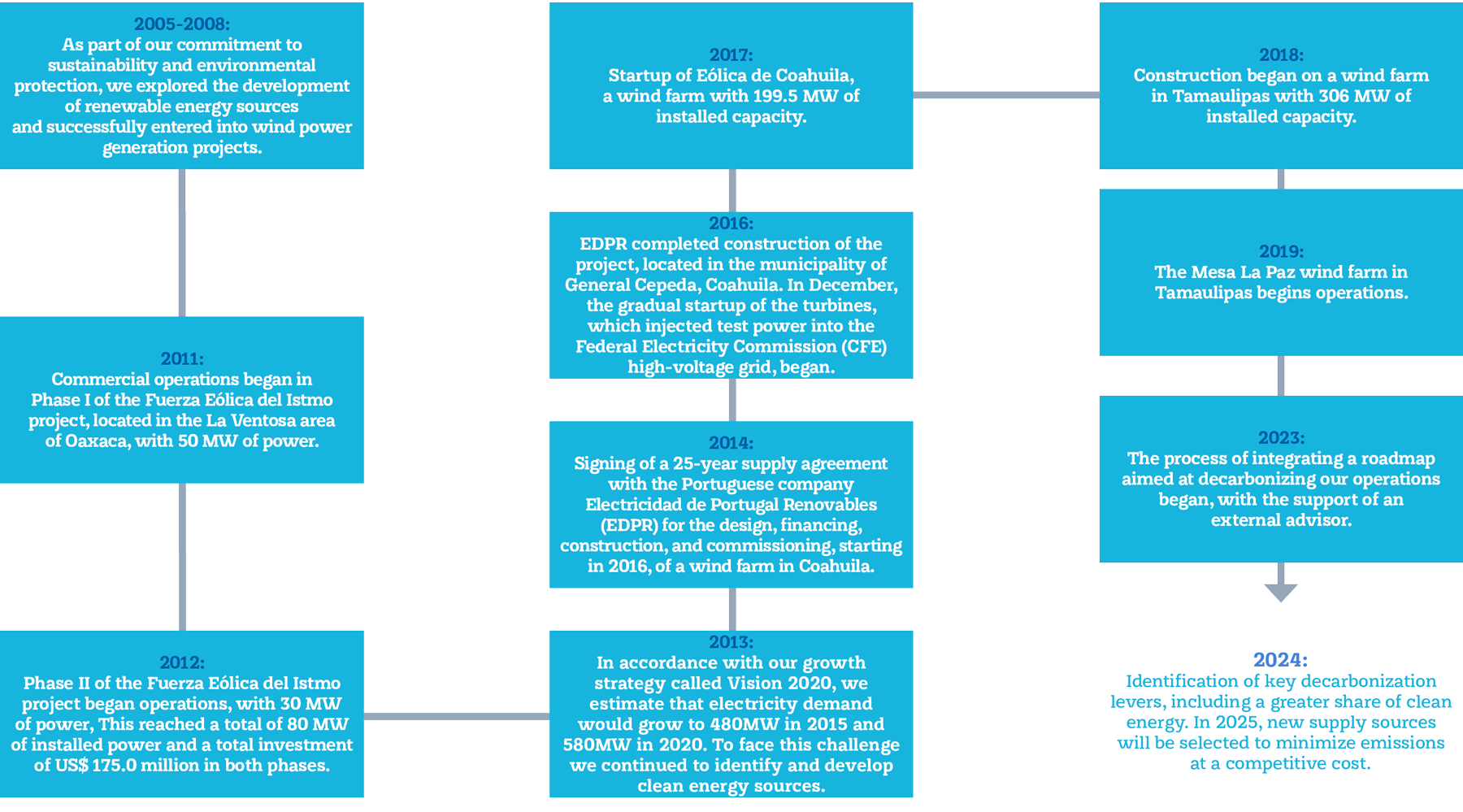
Peñoles’ journey as a pioneer in renewable electric power in Mexico
Energy supply

2020

2021

2022

2023

2024
We have continued efforts to increase renewable electricity from both self-supply sources and the Wholesale Electricity Market (MEM), with the dual objective of reducing costs and our carbon footprint. As a result, the share of renewable energy in our consumption rose from 35% in 2023 to 48% in 2024, accompanied by a 17.1% reduction in cost per kilowatt-hour (kWh).
Adaptation Strategy
A robust adaptation plan begins with climate projections and risk assessments tailored to the specific infrastructure and operational processes of each site. In partnership with the University of Arizona, we developed a climate modeling project for Fresnillo plc’s operations and projects. In addition to providing projections, this project builds internal capacity for understanding physical climate impacts and serves as a foundation for future academic collaborations.
We are enhancing the capabilities of our accounting, finance, and sustainability teams to quantify the impacts of climate risks and opportunities on our financial position, performance, and cash flows.
Preparing for alignment with the IFRS S2 standard on Climate-related disclosures issued by the International Sustainability Standards Board (ISSB).
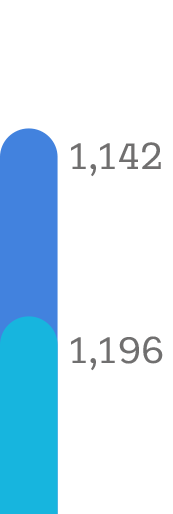
We reduced our GHG emissions by 11.7% compared to 2023 and by 24.2% with respect to our 2022 baseline.
GHG emissions (ktCO2e)

2022

2023
2024
Scope 2
GHG emissions Scope 1 and 2 by source
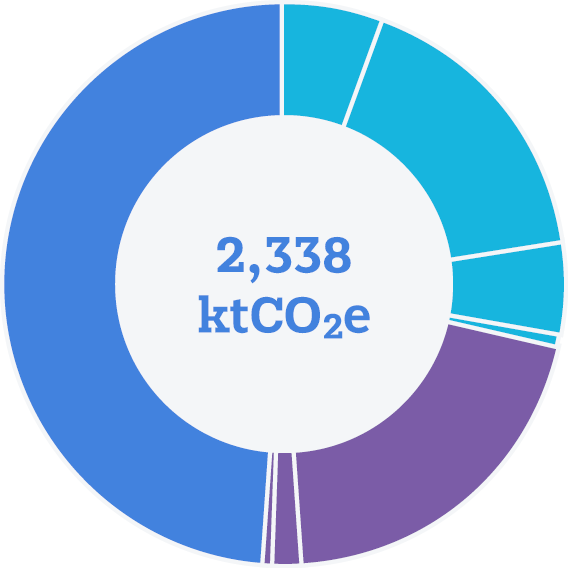
16.9% Natural gas
5.3% Chemical process reaction
0.8% Other fuels or sources
20.2% Diesel
1.9% Liquefied natural gas
0.4% Other fuels or sources
48.8% Electricity from conventional sources
Scope 1, fixed sources
Scope 1, mobile sources
Scope 2, electricity
Energy consumption by type
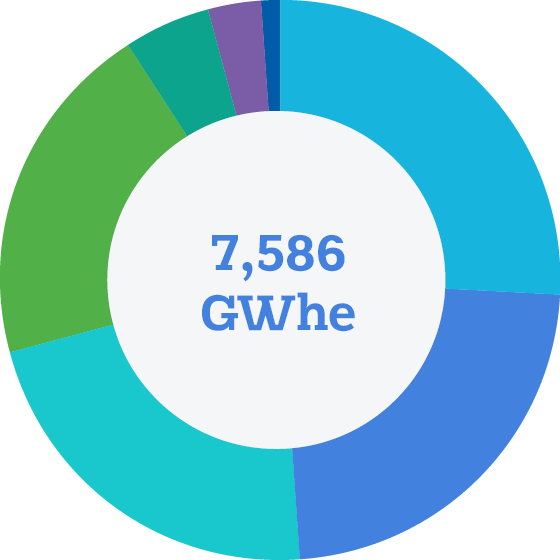
23% Diesel
22% Conventional electricity
20% Clean electricity
5% Metallurgical coke
3% Liquefied natural gas
1% Other fuels or sources
For more information: